Self-Producing Factory-Professional Manufacturer



What are the common applications of wire brush rolls?
Dec 08,2025

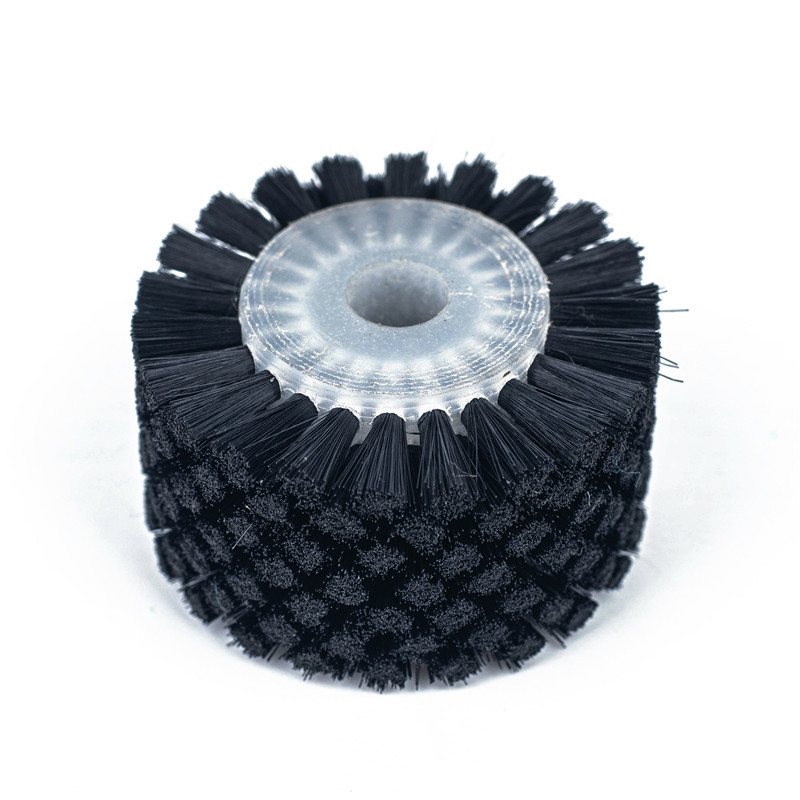
Production Method of Wire roller brushes
The production method involves clamping the wire into a U-shaped metal strip, then winding it onto a steel tube shaft. The length of the wool roll can be customized. The steel wire roll is first formed by splicing steel tubes, allowing any length of wire roller brush to be produced. After winding onto the steel tube shaft, it is fixed on a wire cutting machine according to specifications. During the U-shaped wire wrapping process, spot welding is performed every few turns to enhance fixation.
Main Materials Used in Wire roller brush Production
A wire roller brush consists of steel wire and a steel shaft. Common wire diameters include 0.1, 0.2, 0.3, 0.4, 0.5, and 0.6 mm steel wire, stainless steel wire, and copper-plated steel wire. The steel shaft typically uses 100–400 mm steel pipes with welded shaft ends on both sides. Both the brush filament material and the shaft can be customized.
Application Range
Stainless-steel wire roller brushes are installed on automatic high-speed brushing and polishing machines. The wire roller brushes slide at high speed across the upper and lower surfaces of strip materials in the opposite direction of movement. The brushed oxide layer is rinsed off using a closed-loop cooling water system. Typical coil thickness ranges from 1.09–6.35 mm, and the wire brushes are usually replaced every 20,000 sheets or 40,000 coils produced.
Common specifications include 6×14 or 5×14 holes. Brush wire materials are 304 stainless steel wire or standard carbon steel wire. Each hole generally contains five folded wires, with an exposed wire length of about 20 mm. Brushes made of ordinary carbon steel wire rust easily and cannot be used for long, and their quality is far inferior to 304 stainless-steel wire brushes.
Wire roller brushes are widely used in industrial and agricultural fields. Their main functions include cleaning and treating surfaces, removing residues, and reducing contamination.
1. Metal Processing
In metalworking, wire roller brushes are used to clean, polish, and remove surface burrs, protrusions, and oxide layers to achieve smooth finishes. They can remove oil stains, welding slag, and oxides from metal surfaces before painting, and strip old paint or coatings. They also remove burrs and help improve the strength of the material during surface treatment.
2. Woodworking
In woodworking, wire roller brushes are used to remove bark, wood chips, and other impurities so that logs can be processed into furniture, flooring, and other wood products. They can also smooth the wood surface to produce even, polished wooden products. Wire roller brushes are also used for contour blending and structural grain finishing, allowing changes to wood texture, color, and craft quality.
3. Food Processing
In the food industry, wire roller brushes are commonly used for cleaning, polishing, peeling, cutting, and scoring. They are used to remove skins or residues from fruits, clean vegetable surfaces, and eliminate grease or stains. They are particularly suitable for processing vegetables, fruits, beans, and rice.
4. Textile Processing
In textile manufacturing, wire roller brushes clean and polish garments and fabrics. They remove lint, wool fibers, and cotton residues, making the fabric smoother and softer. After textile finishing, wire roller brushes can also scrape off surface stains and contaminants.
5. Medical Equipment
In the medical field, wire roller brushes are used to clean and disinfect equipment to prevent cross-contamination. They remove stains and contaminants from equipment surfaces and can assist in sterilization and surface protection, enabling long-term use of the equipment. They are used for medical devices, surgical instruments, and pharmaceutical packaging.
6. Industrial Cleaning
Industrial cleaning often requires removing contaminants from equipment and work areas. Wire roller brushes clean machine surfaces, equipment, pipelines, production lines, and other structures by removing oil, rust, and debris. They help improve efficiency by simplifying cleaning procedures. They also support normal equipment operation and ensure high efficiency and quality in industrial production.
These are the most common uses of wire roller brushes, spanning multiple industries. As a highly practical auxiliary tool, wire roller brushes are not only essential in industrial applications but also useful in many daily-life scenarios.
Hot Tags:

Contact Us
CEO: Alan
Email: alan@virostech.com
Phone: +86-15215693689
Sales Manager: Edith
Email: Edith@virostech.com
Phone: +86-15215693689
Lianxin Brush Industry
CEO : Alan
Sales Manager: Edith





REQUEST QUOTE
Please pay attention to your email.