Self-Producing Factory-Professional Manufacturer



Roller Brush Manufacturing Standards and Structure
Oct 27,2025

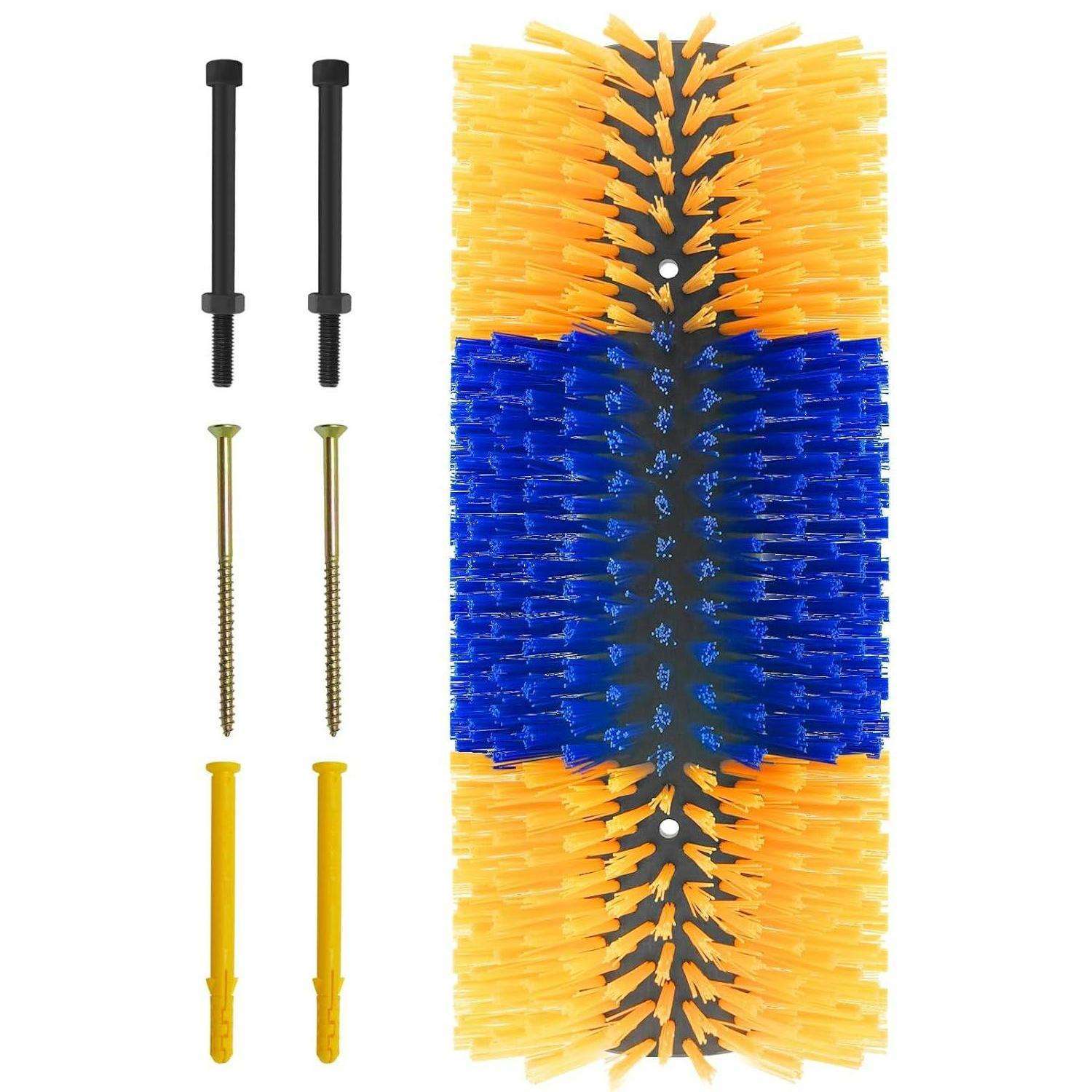
The construction of a roller brush typically consists of a metal shaft, a bristle attachment body (such as plastic tubing or nylon tubing), and the bristles themselves. The metal shaft serves as the foundation of the roller brush, while the bristle attachment body secures the bristles in place. The bristles can be made from materials like nylon filaments, plastic filaments, horsehair, or pig bristles.
In terms of materials, roller brushs require high strength, high hardness, low wear, high-temperature resistance, and corrosion resistance. Common materials include stainless steel, alumina silicate, and wear-resistant alloys. These materials ensure the quality and service life of roller brushs.
In terms of size, brush roll diameters typically range from 2.5 inches to 5 inches, with common sizes being 3 inches, 4 inches, and 5 inches. Specific dimensions are selected based on the requirements of the actual application scenario.
In terms of performance metrics, brush rolls generally have the following requirements: Brush surface wear should be ≤0.04mm/m² to ensure the bristles are not easily worn during use; Working pressure should be ≤20 MPa to guarantee stability under normal operating conditions; Abrasive particle size should be 0.1–0.15 mm to meet specific processing requirements; Additionally, service life should be ≥10 million cycles to ensure extended durability.
Furthermore, roller brushs have extensive applications, primarily in cleaning machinery, printing and dyeing machinery, primary and secondary processing of steel plates, furniture manufacturing, food processing machinery, and sanitation equipment.
Note that specific roller brush standards may vary based on industry regulations or application scenarios. Therefore, selecting appropriate standards requires consideration of actual requirements and industry norms during practical implementation.
The manufacturing standards for roller brushs encompass multiple aspects to ensure their quality, performance, and service life. Below are some key manufacturing standards:
- Material Selection: Materials for roller brushs must exhibit high strength, high hardness, low wear, high-temperature resistance, and corrosion resistance. Common materials include stainless steel, alumina silicate, and wear-resistant alloys. Selecting appropriate materials ensures the brush roll's wear resistance and corrosion resistance, extending its service life.
- Manufacturing Process: The manufacturing process for brush rolls must be precise and stable to guarantee accuracy and quality. Common manufacturing techniques include welding, casting, and forging. Throughout production, strict control over each process step is essential to ensure dimensional accuracy and surface quality.
- Surface Treatment: Surface treatments enhance the brush roll's wear resistance, corrosion resistance, and anti-adhesion properties. Common methods include electroplating, anodizing, and spraying. The treatment must be uniform and durable without compromising bristle quality or operational efficiency.
- Bristle Selection and Mounting: Bristles constitute a critical component of brush rolls, with their material and density directly impacting performance. Common bristle materials include nylon and polyester, selected based on application environments and requirements. The mounting process must ensure bristles are uniformly and densely attached to the roll body to optimize scrubbing effectiveness.
- Quality Inspection and Testing: Upon completion, brush rolls undergo quality checks and testing to ensure compliance with relevant standards and requirements. Inspections cover dimensional accuracy, surface quality, and filament density, while tests may evaluate abrasion resistance, corrosion resistance, and cleaning efficacy.
Note that specific roller brush manufacturing standards may vary across industries, application scenarios, and regions. Therefore, during actual production, reference to relevant industry standards, technical specifications, and customer requirements is essential to ensure optimal quality and performance. Additionally, as technology advances and market demands evolve, roller brush manufacturing standards may undergo updates and refinements.
Hot Tags:

Contact Us
CEO: Alan
Email: alan@virostech.com
Phone: +86-15215693689
Sales Manager: Edith
Email: Edith@virostech.com
Phone: +86-15215693689
Lianxin Brush Industry
CEO : Alan
Sales Manager: Edith





REQUEST QUOTE
Please pay attention to your email.